
written by Lakshina Bajracharya
“Once you’ve met someone, you never really forget them.” – Zeniba, Spirited Away (2001)
I never thought that someone would be a some-place.
When I first heard Ghibli Park required advance booking, I assumed I wouldn’t go. Fortunately, my host family in Japan had already made plans. Suddenly I found myself travelling with three children, a mother, a grandmother, an aunt, and a nine‑month‑old baby, a group that could be a Ghibli cast.
I realized from the moment we arrived, Ghibli Park wasn’t just an amusement park. It was a feeling. A calm one. A gentle one. A deeply intentional one.
“I arrived hoping to meet Totoro. I left thinking like a designer.”
A Theme Park That Begins With Silence
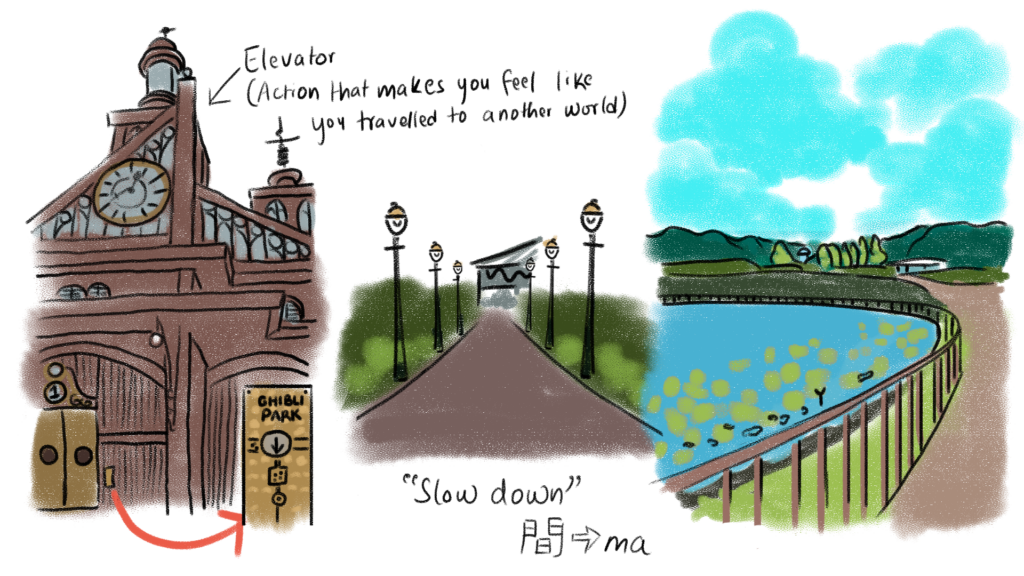
Our journey began with an elevator inspired by Castle in the Sky. When the doors opened, we stepped into a peaceful pond, open landscape, and a panoramic view of the park.
No loud music, no flashing screens, and no rush.
The space quietly seemed to say, “Slow down first.”
This “breather space” reflects the Japanese concept of ma (間), the pause between moments that prepares you emotionally. Ghibli Park wasn’t designed around entertainment; it was designed around experience.
Understanding Without Understanding
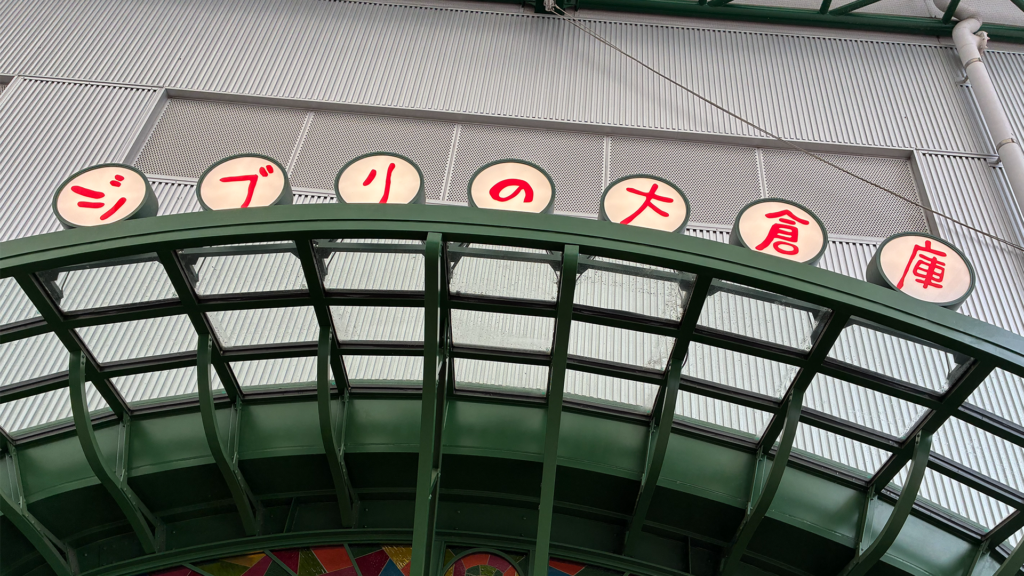
While queuing for the Grand Warehouse, I noticed that almost every sign was written in Japanese.
Although much of Japan uses both Japanese and English signage, the Grand Warehouse entrance and most of Ghibli Park remains entirely in Japanese. Rather than making the park feel inaccessible, it made the experience feel authentic. Studio Ghibli has always felt deeply Japanese, and keeping the visual language intact preserved its identity instead of commercialising it.
Maybe sometimes design isn’t about instant clarity. Sometimes it’s about staying true to where the story belongs.
The Grand Warehouse: A Universe Under One Roof
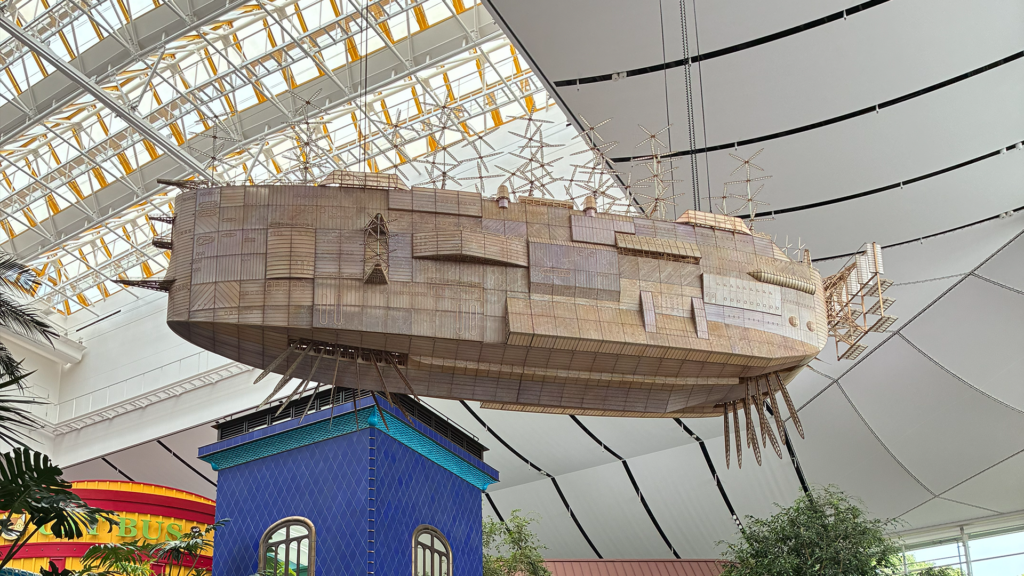
Stepping inside the Grand Warehouse felt like entering the Ghibli universe.
A magnificent mosaic staircase connected different levels while a flying ship slowly rotated overhead. Muted colours, soft natural light, and nature-inspired shapes made the space feel alive without becoming chaotic.
Instead of overwhelming visitors with spectacle, every corner quietly encouraged curiosity, making it feel like a museum and an amusement park at once.
A Moment That Made Me Cry: The Cel Animation Stand
Among all the familiar characters and film sets, one object stopped me completely: an old cel animation stand. Layers of glass. Lights on both sides. A camera suspended above.
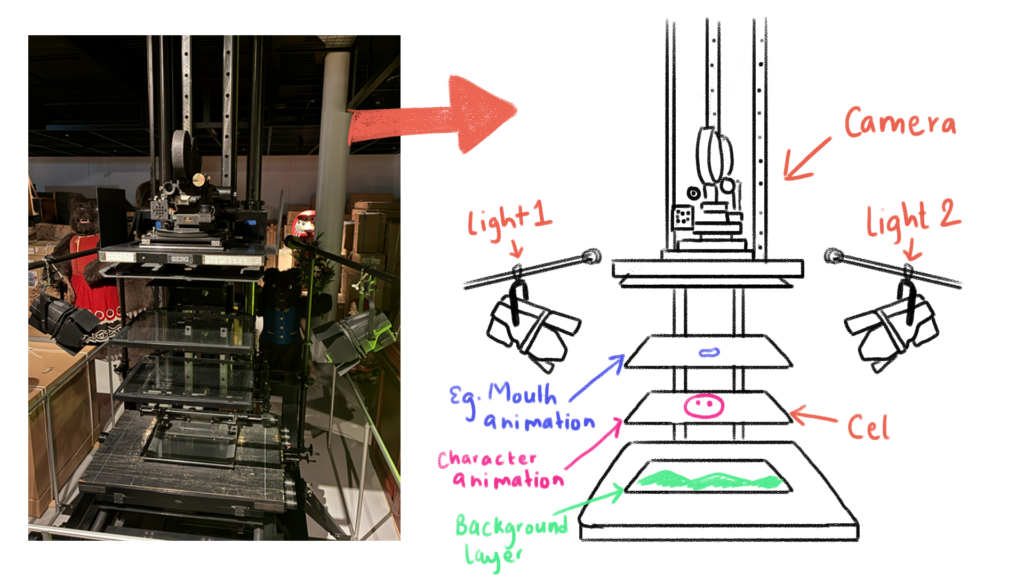
Before digital animation, artists used this specialised setup to layer hand-painted transparent cels over illustrated backgrounds, photographing each frame individually to create movement. Standing in front of it, I suddenly understood the incredible patience and craftsmanship behind every scene of Ghibli movies.
I’d only ever seen one in videos. Standing before it, I suddenly understood the physical process behind hand-drawn animation.
As someone who loves animation, seeing the tools that brought these stories to life was unexpectedly emotional.
For a moment, I wasn’t thinking like a student.
I was simply a fan standing in front of a piece of history.
Details that tell the Story
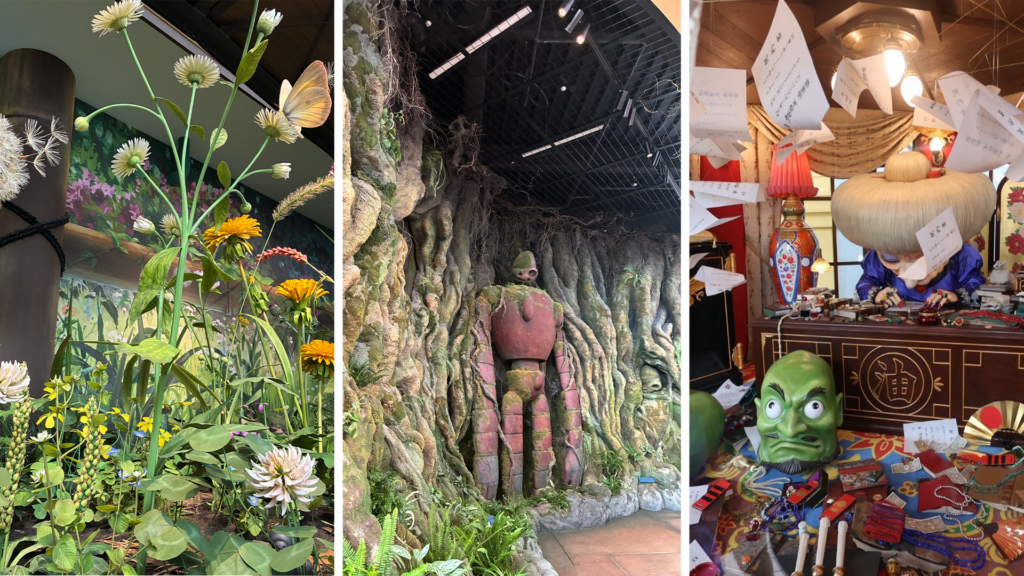
As if we had been dropped into The Secret World of Arrietty, flowers towered above us, giant jars surrounded us, and even a tiny snail trail had been recreated with extraordinary care.
Nothing existed simply because it looked beautiful.
Every detail supported the illusion.
The weathered Robot Soldier looked as though nature had slowly reclaimed it, while Ponyo’s little car felt used, loved, and lived in. Fantasy blended so naturally with everyday life that it became completely believable.
Designing for Children Is Designing for Everyone
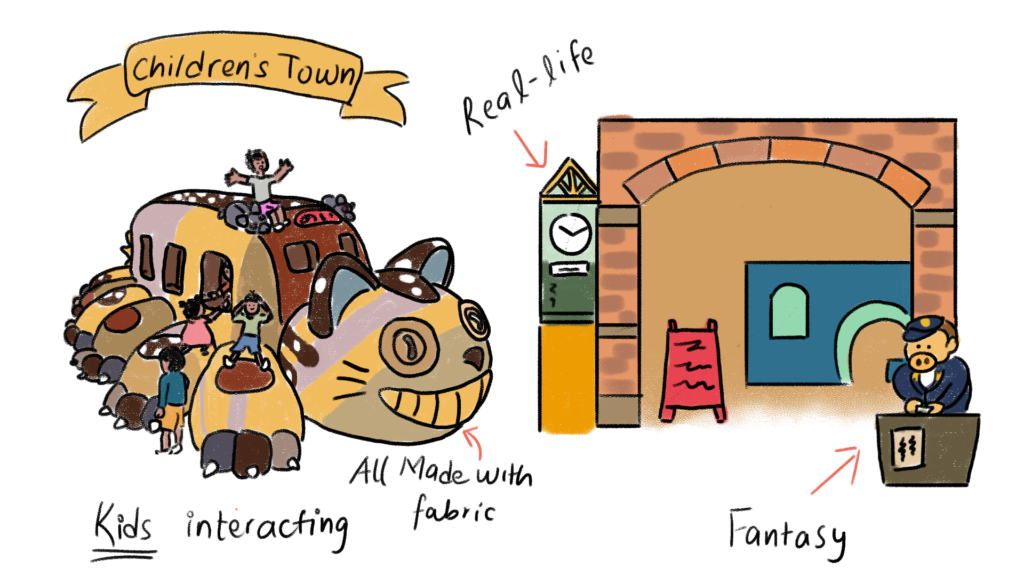
Children’s Town was built entirely at child scale, with miniature train stations, tiny homes, rounded corners, and reachable controls.
Every design decision prioritized safety without compromising imagination.
Watching the children explore reminded me that great design isn’t only beautiful.
It’s thoughtful.
It always considers the people it’s made for.
Learning to Pause
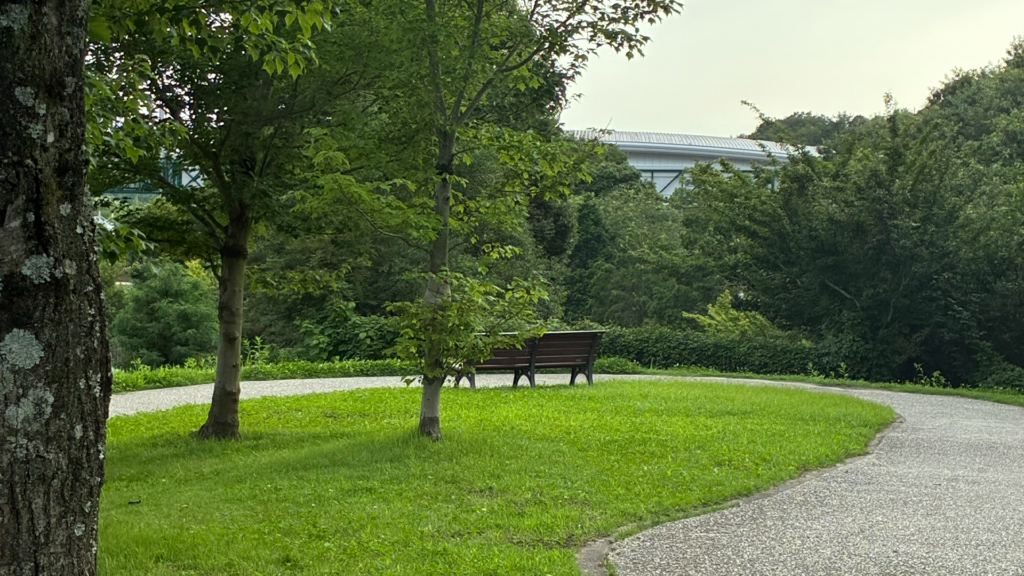
Throughout the park, there were benches, resting areas, and quiet spaces which invited families to stop.
My host family did exactly that. We sat together, shared food, and rested before continuing.
These pauses weren’t accidental but part of the storytelling.
Ghibli Park reminded me that stillness can be just as meaningful as movement.
Exclusive Cinema: A Night in the Valley of Witches
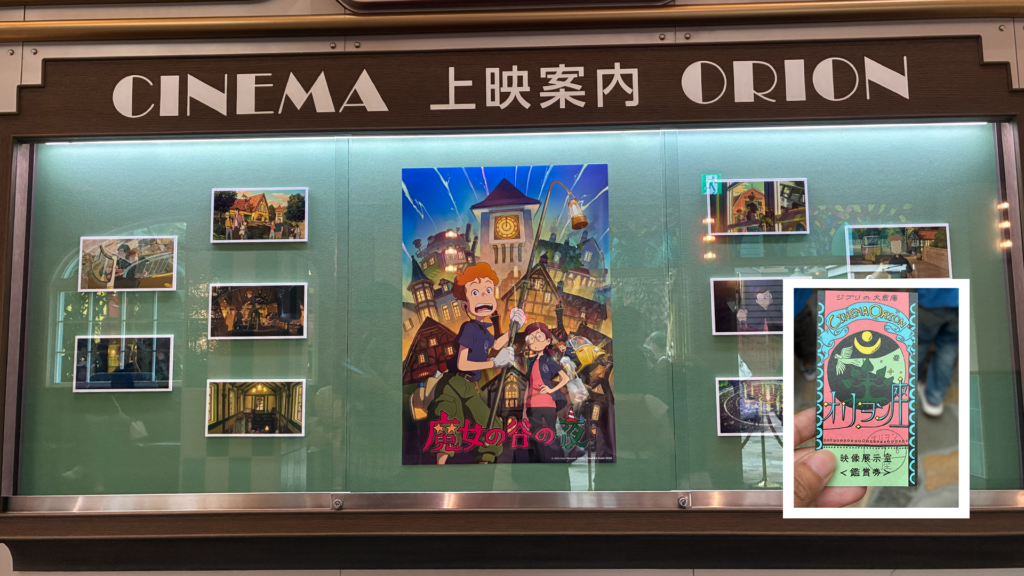
Inside the Grand Warehouse, every visitor received a vertical cinema ticket for an exclusive Studio Ghibli short film that can only be seen at the park.
This exclusivity is part of the experience design: scarcity creates value and physical tickets create ritual. That tiny piece of paper becomes part of the experience and memory.
Although the film was entirely in Japanese, I still understood the story through movement, expressions, and pacing.
Powerful storytelling doesn’t need to always be told through words, sometimes it can be told through compelling visuals. This was an important reminder for me as a visual communication student.
Japan Beyond Ghibli
As we left the park, I realized that the same attention to detail existed throughout Japan. Ghibli Park might have been a tourist attraction, but it was more than just entertainment. It was an extension of Japanese culture. It reflected the same care, craftsmanship, and quiet attention to detail that I had been experiencing throughout my journey.
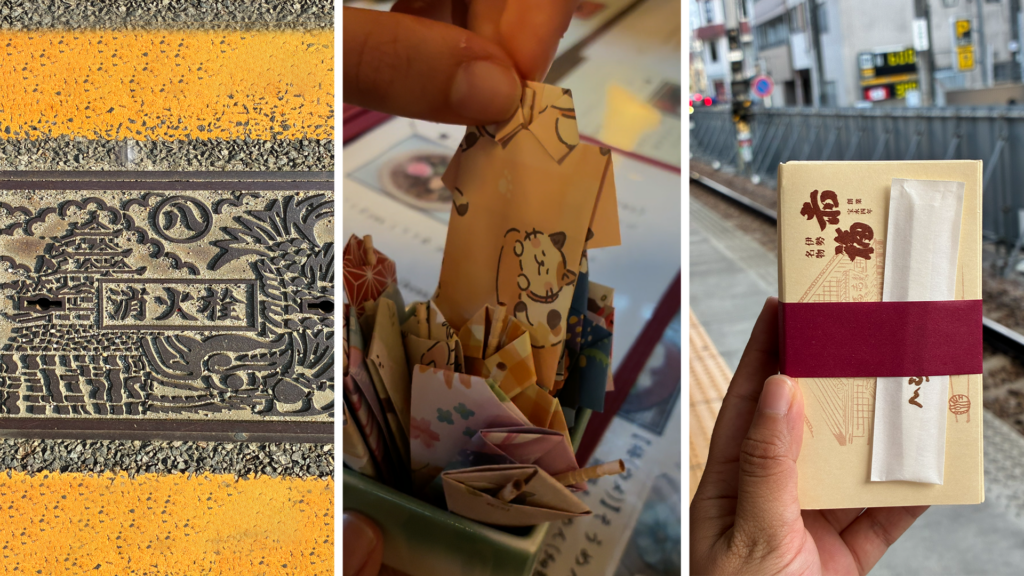
From beautifully designed manhole covers to thoughtful packaging, even the humble toothpick at a restaurant reflected the same philosophy. Wrapped in folded paper shaped like a tiny shirt and tie, it kept the toothpick hygienic while turning an everyday object into something unexpectedly delightful. It reminded me that in Japan, good design isn’t reserved for galleries or landmarks, it quietly lives in the smallest details.
What I Took Home
Ghibli Park was my chance to immerse myself into the worlds that shaped my childhood. I discovered more than what I initially expected: my passion for visual storytelling and the reason I chose the career path I am on now.
Great design doesn’t tell people what to feel. It gently creates the conditions for them to discover those feelings themselves.
And just as Zeniba said, “Once you’ve met someone, you never really forget them.”
I met a park. I met my inner child again. And I met Japan, a place where even the smallest details tell a story.
Perhaps that’s why Ghibli Park doesn’t feel like a theme park. It feels like stepping into a story that continues long after you’ve left.
Have you also read these articles?
Why the World Cup Meant More Than Just Football to ISH Resident
